The representation of celestial bodies in art has accompanied humanity since its origins. The sun, the moon, and the stars have been conceived as deities, guides, and metaphors for human life. Their presence in modern painting continues a tradition that unites myth, history, and aesthetics. The Carmen Thyssen-Bornemisza Collection offers outstanding examples.
The Sun: Creative and Destructive Force
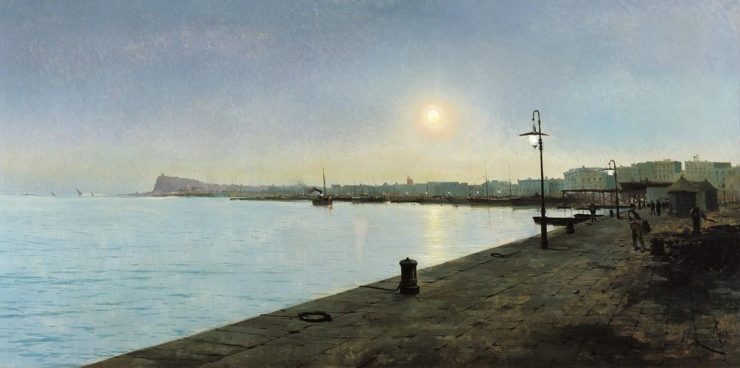
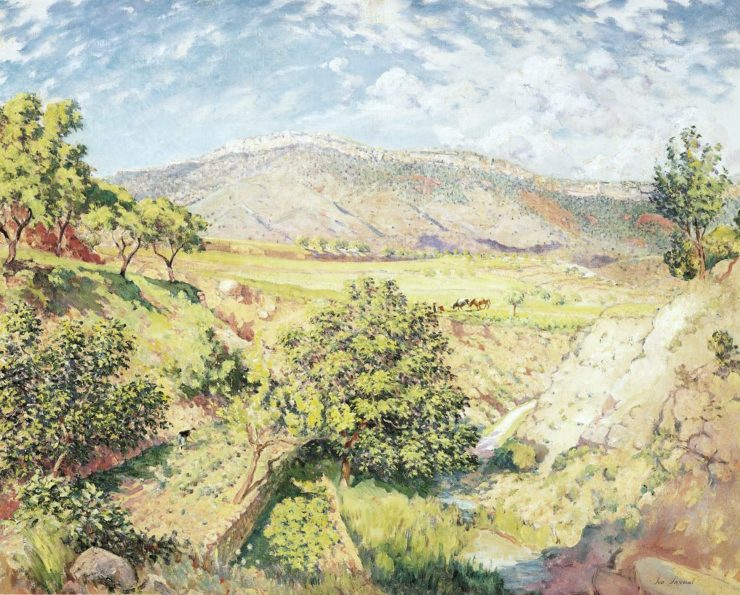
The sun has been revered as a source of fertility, creativity, and power. In Greek mythology, Helios crossed the sky in his fiery chariot, while in Hindu tradition Rudra embodied its destructive aspect. Plato defined it as “the moving image of eternity,” and alchemy interpreted it as the “Sun King,” a symbol of consciousness and regeneration, but also dissolution. In À ple sol, Cornudella by Iu Pascual i Rodés, sunlight becomes the protagonist of the Catalan landscape, evoking nature’s fecund power. Similarly, Eliseu Meifrèn i Roig uses Mediterranean light in Port of Barcelona to transform the harbour scene into a vibrant space, where the sun is a metaphor of dynamism and modernity. Both works perpetuate the tradition of seeing in the sun the vital principle that orders and sustains the world.
The Moon: Nocturnal and Transformative Muse
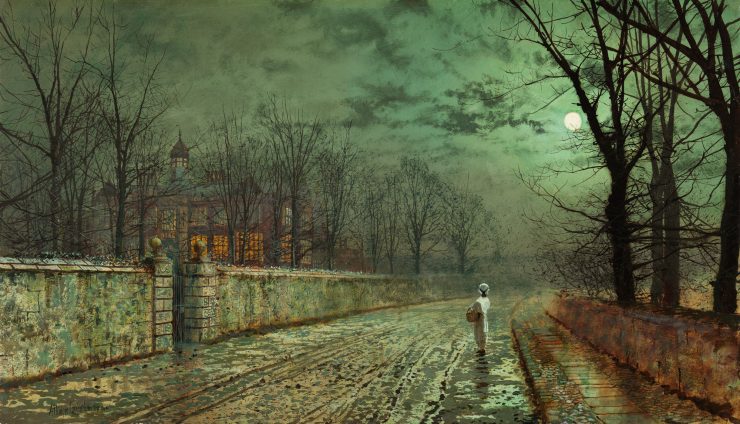
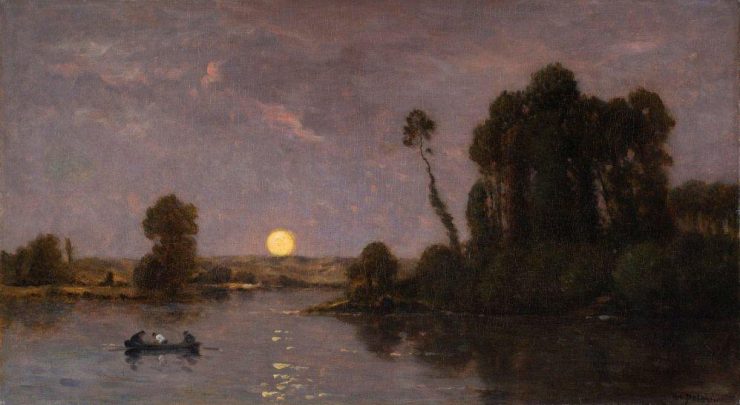
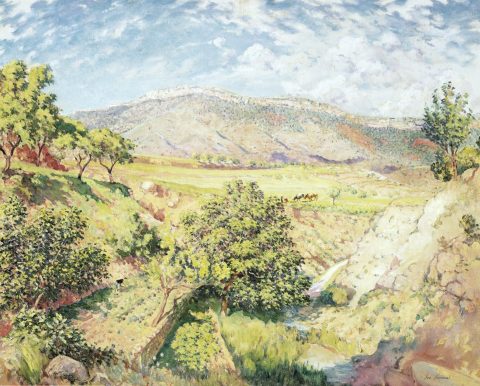
Associated with goddesses such as Selene, Artemis, and Hecate, the moon has symbolized fertility, mystery, and renewal. In Egypt, Hathor nourished the world with her lunar milk; in Mesopotamia, Nanna-Sin was considered a celestial healer; and in Greco-Roman tradition, the moon presided over the cycles of life and death. Alchemy interpreted it as the counterpart of the sun: moist, changeable, wise, and magical, capable of guiding the initiate into the depths of the psyche. In Hippolyte Camille Delpy’s Clair de lune, moonlight envelops the landscape in a serene atmosphere, evoking the Romantic tradition of nocturnal contemplation. In John Atkinson Grimshaw’s Moonlit Evening, the moon illuminates an urban scene with a melancholic tone, reflecting the relationship between the human and the transcendent. Both works engage with the ancestral vision of the moon as regulator of vital cycles and as a muse of poetry, with references ranging from the Japanese poet Saigyō to Federico García Lorca.
The Stars: Eternity and Guidance
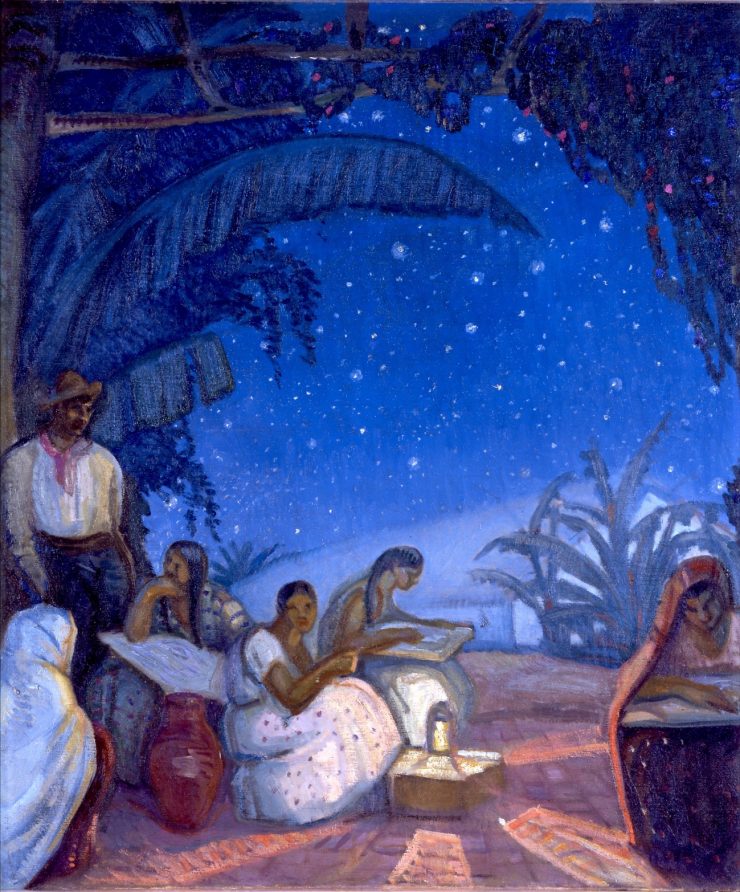
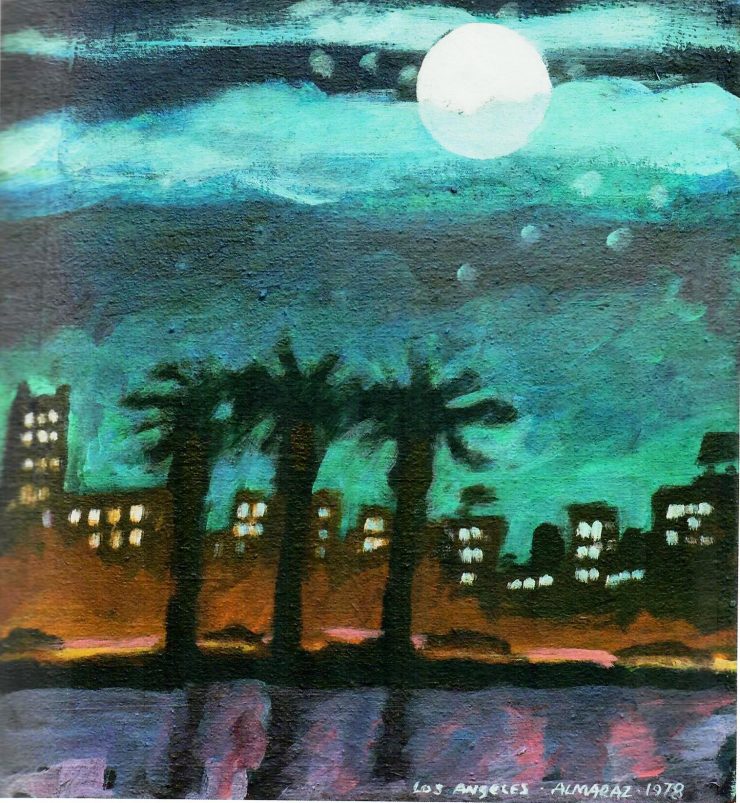
Stars, whose light travels millions of years before reaching us, have long been symbols of eternity and transcendence. In Mesopotamian tradition, Inanna-Ishtar was identified with the morning star, while in Egypt, Nut gave birth to the stars. Likewise, the Pole Star was conceived as the axis of the universe, a point of order and stability, while astrology transformed constellations into maps of destiny. In Carlos Alberto Castellanos’ Noche de campo, the starry sky becomes a space of contemplation, evoking the ancestral role of stars as guides for travellers and companions of humankind. Meanwhile, Carlos Almaraz’s Los Ángeles reinterprets the heavens in an urban key: city lights evoke modern constellations, reminding us how humanity has created new artificial skies that extend our fascination with the stellar realm.
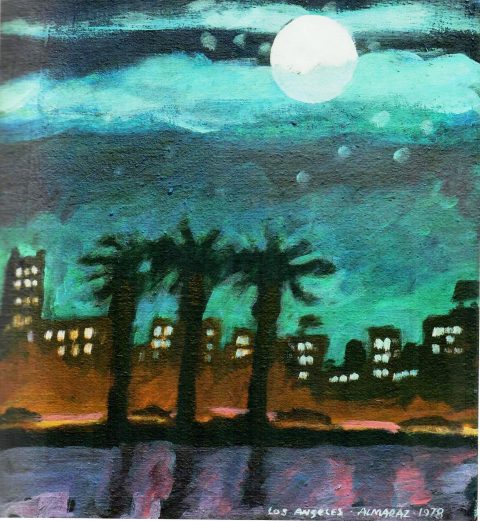
The Carmen Thyssen-Bornemisza Collection shows how the sun, the moon, and the stars remain universal symbols in art. The sun embodies creative and destructive force, the moon the nocturnal and transformative muse, and the stars eternity and guidance. These works engage with mythological traditions and historical references, demonstrating that gazing at the sky has always been a reflection on human condition and on the cultural continuity that links us to the past.
Bibliography:
– Archive for Research in Archetypal Symbolism (ARAS). (2010). The Book of Symbols: Reflections on Archetypal Images. Köln: Taschen.