
Venus and Mars are one of the most fascinating couples in classical mythology. Their relationship symbolizes the coexistence of two universal forces that appear irreconcilable: love and war.
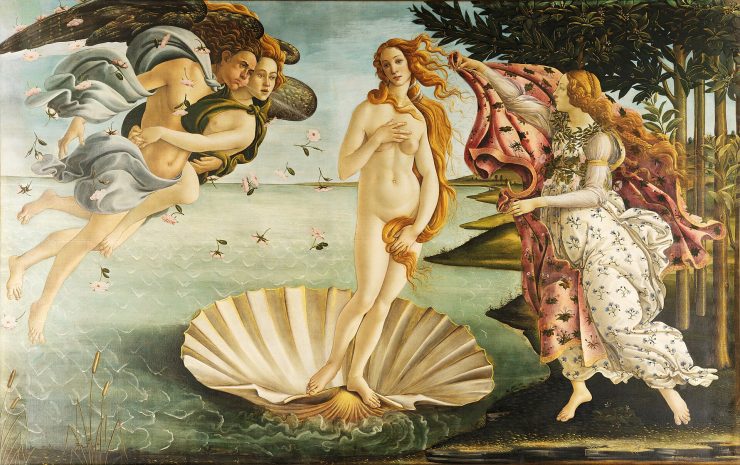
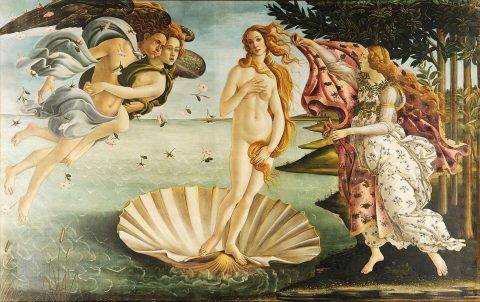
Venus, goddess of love and beauty, has a mythical origin linked to the sea. According to Hesiod’s account, she was born from the foam formed after the mutilation of Uranus. From this birth emerges an irresistible figure, capable of seducing both gods and mortals. Her iconographic attributes are unmistakable: the shell, jewels, the mirror, the dove, myrtle, as well as the presence of the Cupids and the Graces.
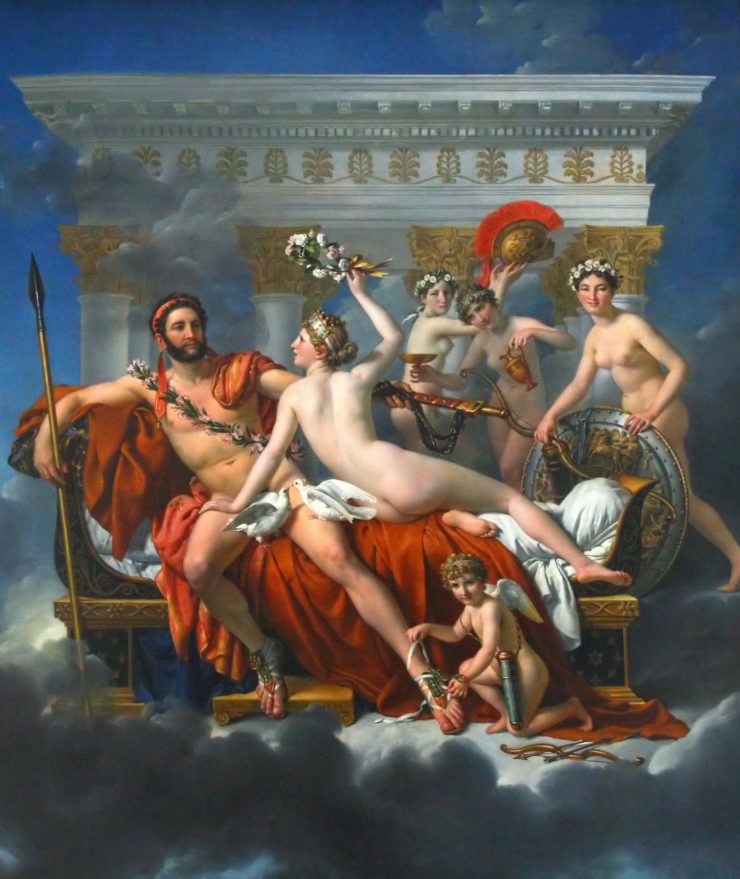
Mars, son of Jupiter and Juno, embodies war in its most brutal form. He is not associated with strategy or military intelligence, attributed to Minerva, but rather with instinctive violence and chaotic, destructive combat. His symbols are equally forceful: the spear, the sword, the armor, the bronze helmet, the war chariot, and animals such as the dog or the vulture all underscore his fierce and impulsive nature.
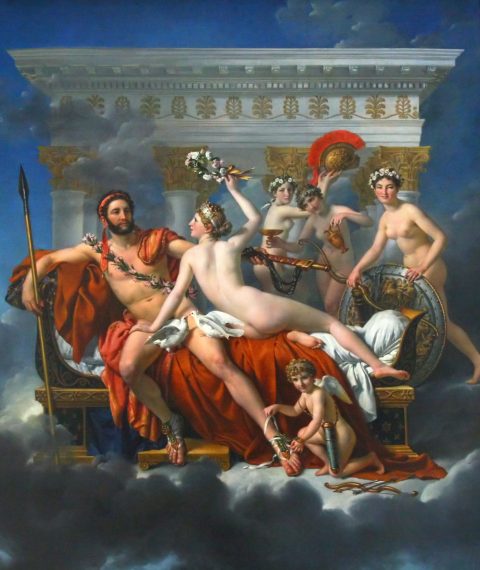
This contrast between Venus and Mars is what makes their relationship so powerful: she embodies creation and harmony, he destruction and conflict. Together, they show how love and war can be inseparable, opposing forces that nevertheless need each other.
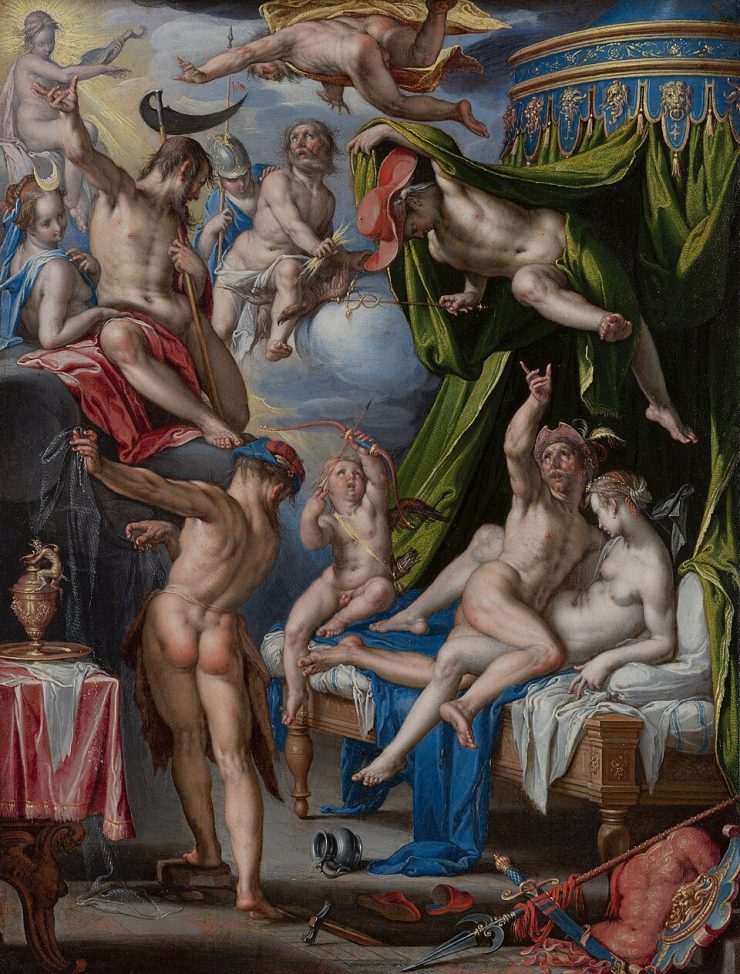
Their love affair is narrated in detail by Ovid in the Metamorphoses. Venus, married to Vulcan, god of fire and the forge, maintains a secret relationship with Mars. The Sun discovers the adultery and reveals it to Vulcan, who decides to take revenge not through violence but through cunning. He constructs an invisible bronze net and places it above the lovers’ bed. When Venus and Mars meet there, they are trapped and exposed before the other gods of Olympus. The scene, full of eroticism and irony, becomes an episode of divine mockery and humiliation, in which the gods laugh at the caught couple.
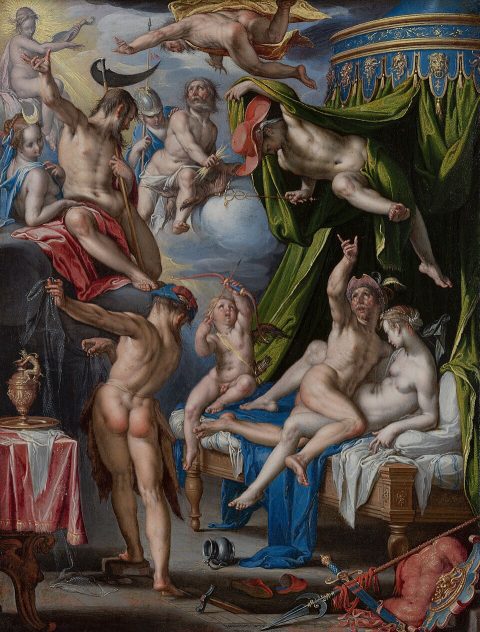
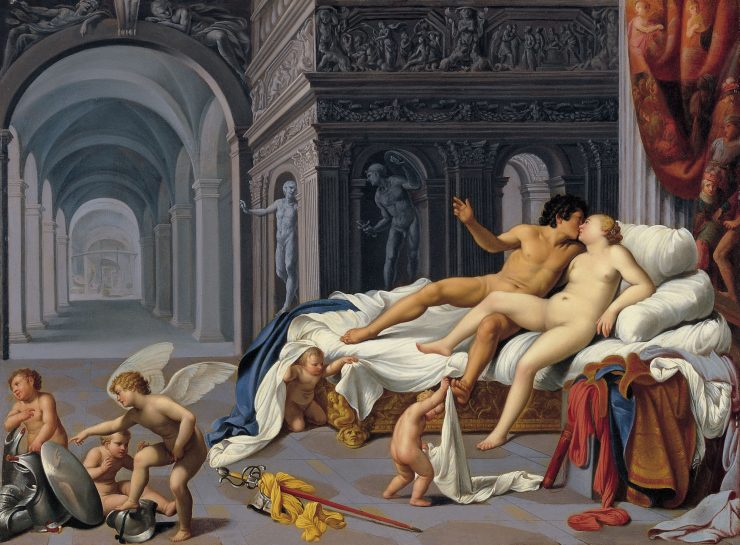
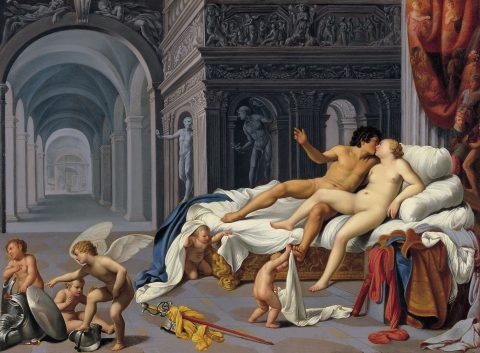
This myth has inspired numerous works of art throughout the centuries. In Venus and Mars, Carlo Saraceni recreates the moment of adultery inside Vulcan’s house. In the foreground, the lovers rest on a white bed, a symbol of purity that contrasts with the intensity of their passion. Around them, small Cupids play with Mars’s clothing and armor, introducing an ironic and light-hearted tone that emphasizes the vulnerability of the god of war in the face of the power of love.
Ultimately, the myth is not only a story of forbidden love. It is a metaphor for the eternal tension between opposing forces that coexist within the human being. Love and conflict, attraction and violence, creation and destruction: energies that, despite their contradiction, are necessary to shape human experience.