German Expressionism was an artistic movement that emerged at the beginning of the 20th century, especially between 1905 and the years following the First World War. It developed during a period of profound social and cultural change, marked by industrialization, rapid urbanisation and, later, the devastating impact of the war. In this context, many artists felt that art should no longer be limited to representing reality but should instead express human emotions and inner conflicts.
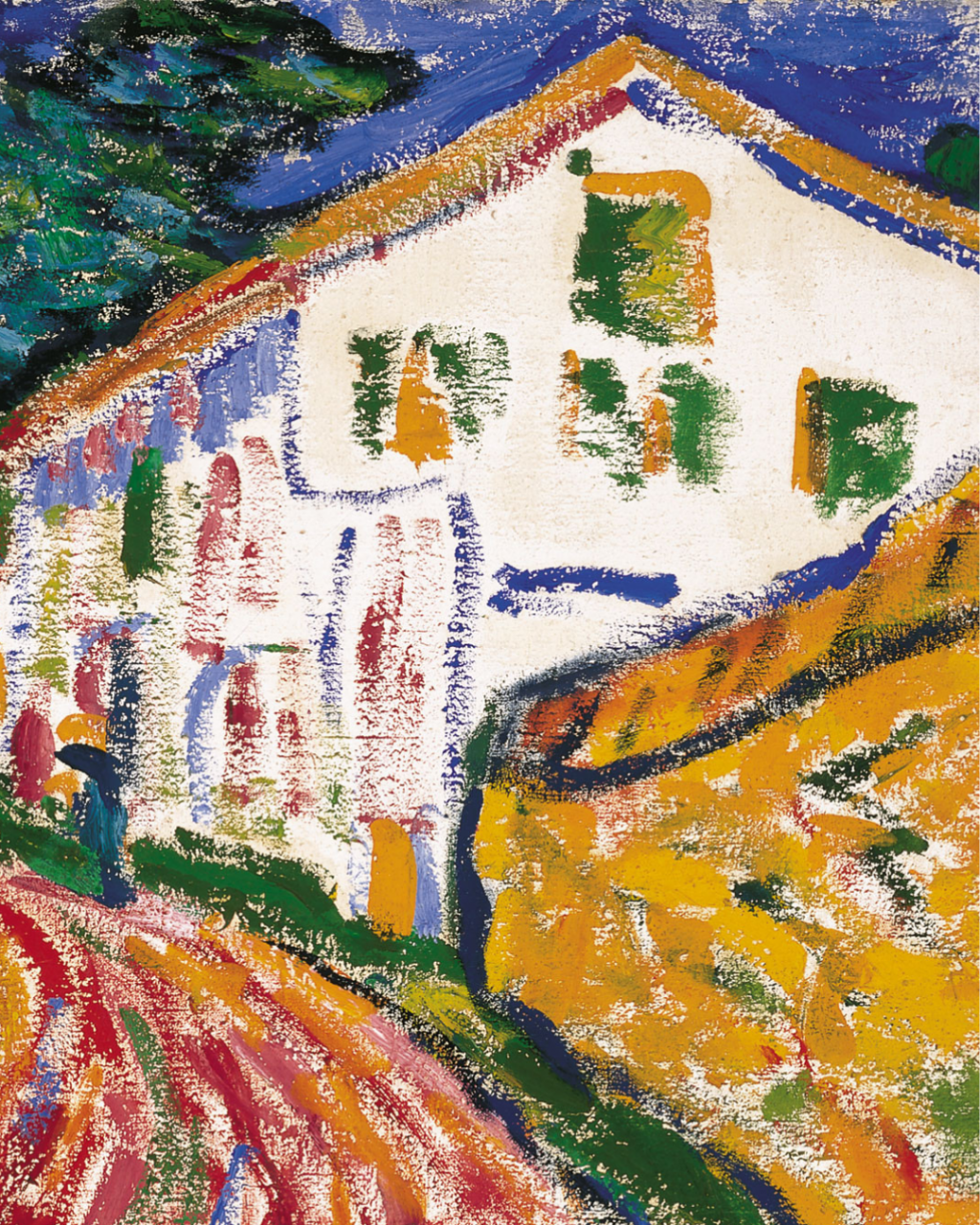
For this reason, Expressionism broke away from the principles of Impressionism, which sought to capture reality as it was perceived. Instead, Expressionist artists used intense colours, distorted forms and energetic brushstrokes to convey feelings such as anguish, anxiety, loneliness and criticism of an increasingly dehumanised society. Distortion was no longer seen as a flaw but became an artistic device that made it possible to present reality from an emotional perspective.
In addition to expressing emotions, many artists believed that art should also have a spiritual dimension. This idea was developed by Wassily Kandinsky in his book Concerning the Spiritual in Art (1911), in which he argued that colours and forms could evoke emotions without the need to depict recognisable objects. This approach played a key role in the development of abstract art and established Kandinsky as one of its greatest pioneers.
The movement developed mainly through two groups. The first was Die Brücke, founded in Dresden in 1905 by Ernst Ludwig Kirchner, Erich Heckel, Karl Schmidt-Rottluff and Fritz Bleyl. Their aim was to break away from academic traditions and create a freer, more spontaneous form of art. Inspired by African and Oceanic art as well as by nature, their works are characterized by vivid colours, distorted figures and remarkable expressive intensity.
A few years later, Der Blaue Reiter was founded in Munich under the leadership of Kandinsky and Franz Marc. Although it shared the goal of renewing art, this group was especially interested in spirituality and the symbolic power of colour. Its artists gradually moved away from figurative representation, paving the way for abstract painting.
However, the development of Expressionism was profoundly shaped by the First World War. Although some artists initially believed that the war would pave the way for a new society, their experience in the trenches completely transformed this view. Violence, destruction and suffering left a deep mark on their works and strengthened the movement’s critical and emotional character.
Ultimately, German Expressionism was much more than an artistic style. It represented a new way of understanding art as a means of expressing feelings, questioning reality and exploring the spiritual dimension of human beings. Its influence extended to painting, cinema, literature and architecture, making it one of the most important and revolutionary artistic movements of the twentieth century.