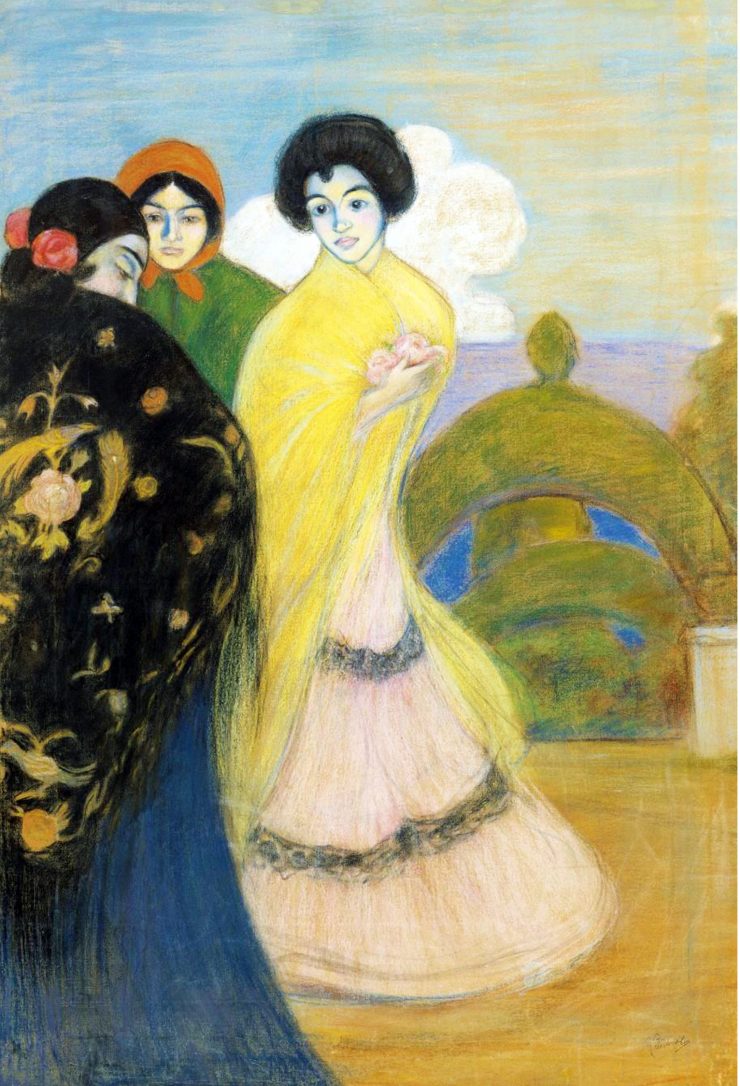
In 1888, coinciding with the celebration of the Barcelona Universal Exposition, Modernisme emerged in Catalonia. Related to French Art Nouveau, German Jugendstil, English Modern Style, and Italian Liberty, it became a movement that embraced all the arts.
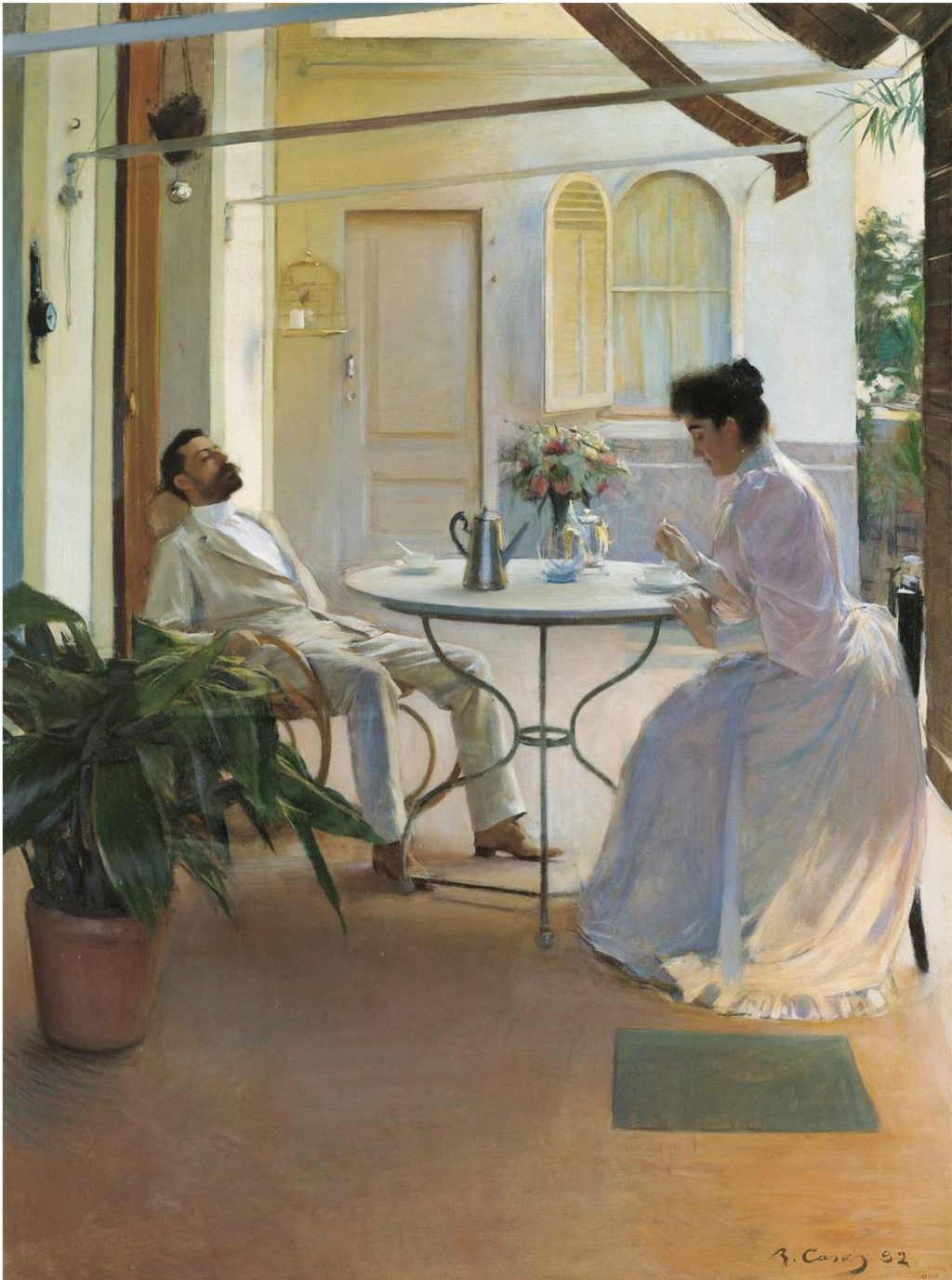
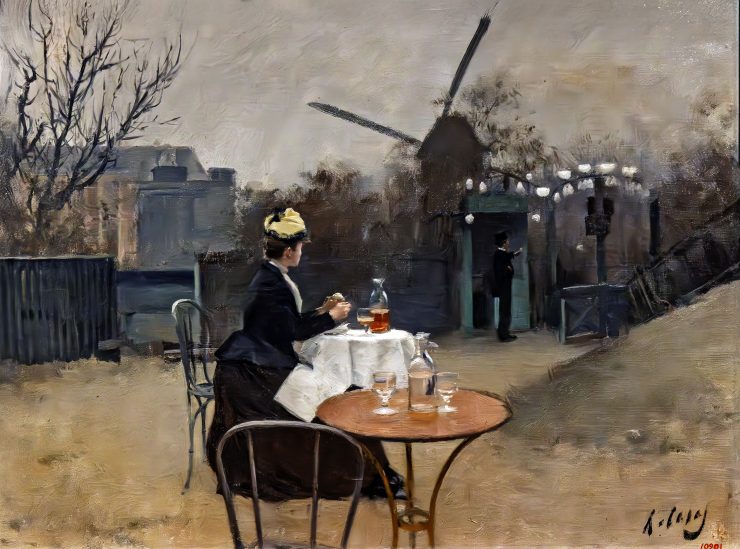
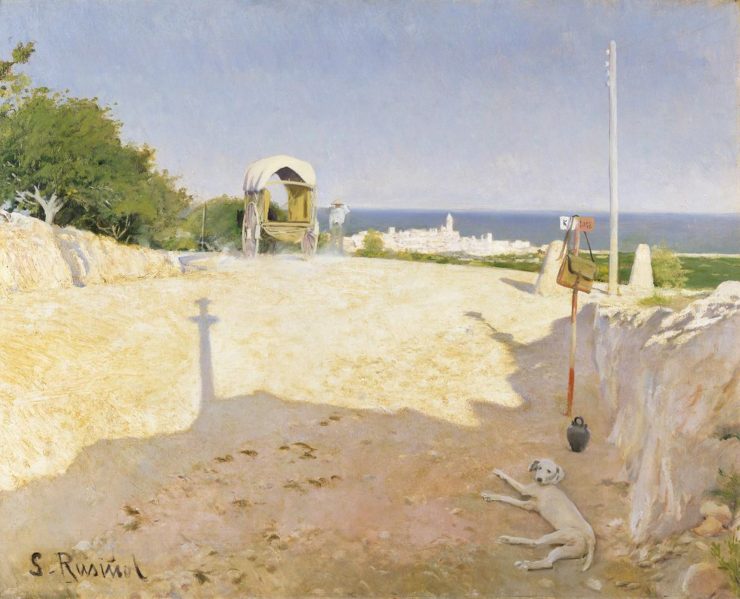
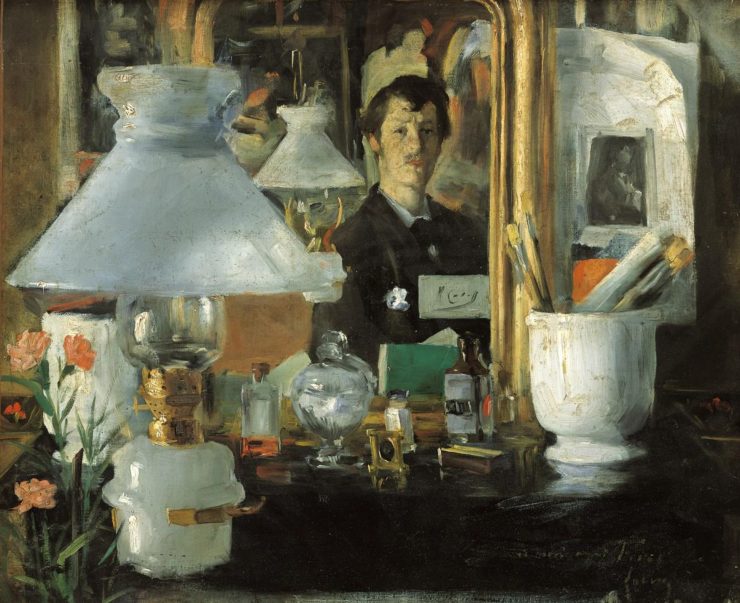
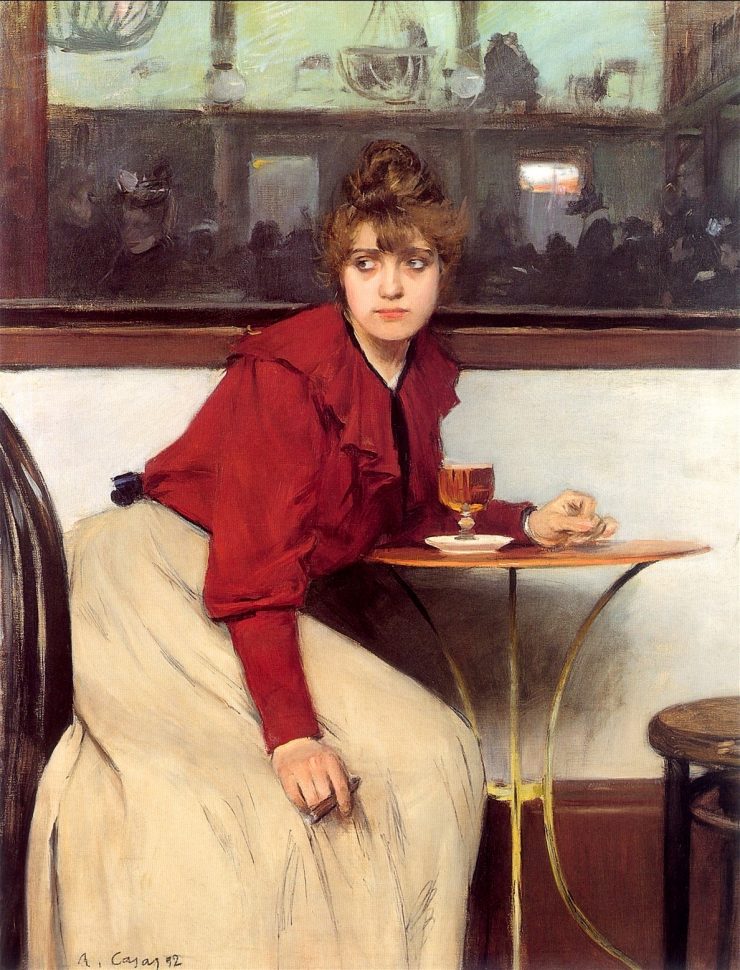
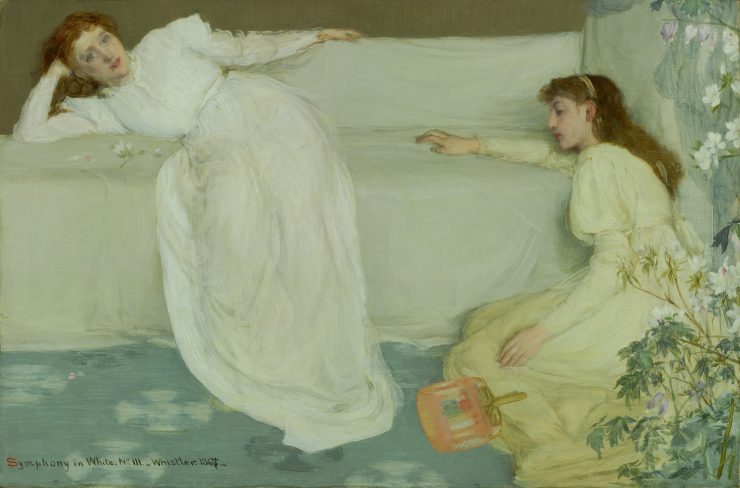
In painting, modernity arrived from Paris with Santiago Rusiñol and Ramon Casas, who, through their travels, absorbed the Impressionism of Édouard Manet and the work of Edgar Degas, characterized by unusual framing and long, blurred brushstrokes. At the same time, they also came into contact with the work of James McNeill Whistler and Japanese printmaking, enriching their pictorial language with international influences that deeply shaped Catalan Modernisme.
Although Impressionism was already considered outdated in much of Europe, they managed to synthesize the best of Impressionist and Post-Impressionist masters, incorporating everyday scenes inspired by Parisian boulevards and bohemian life. Clear examples of this synthesis are Bal du Moulin de la Galette and Casas’ Plein-Air, or Rusiñol’s Café des Incohérents.
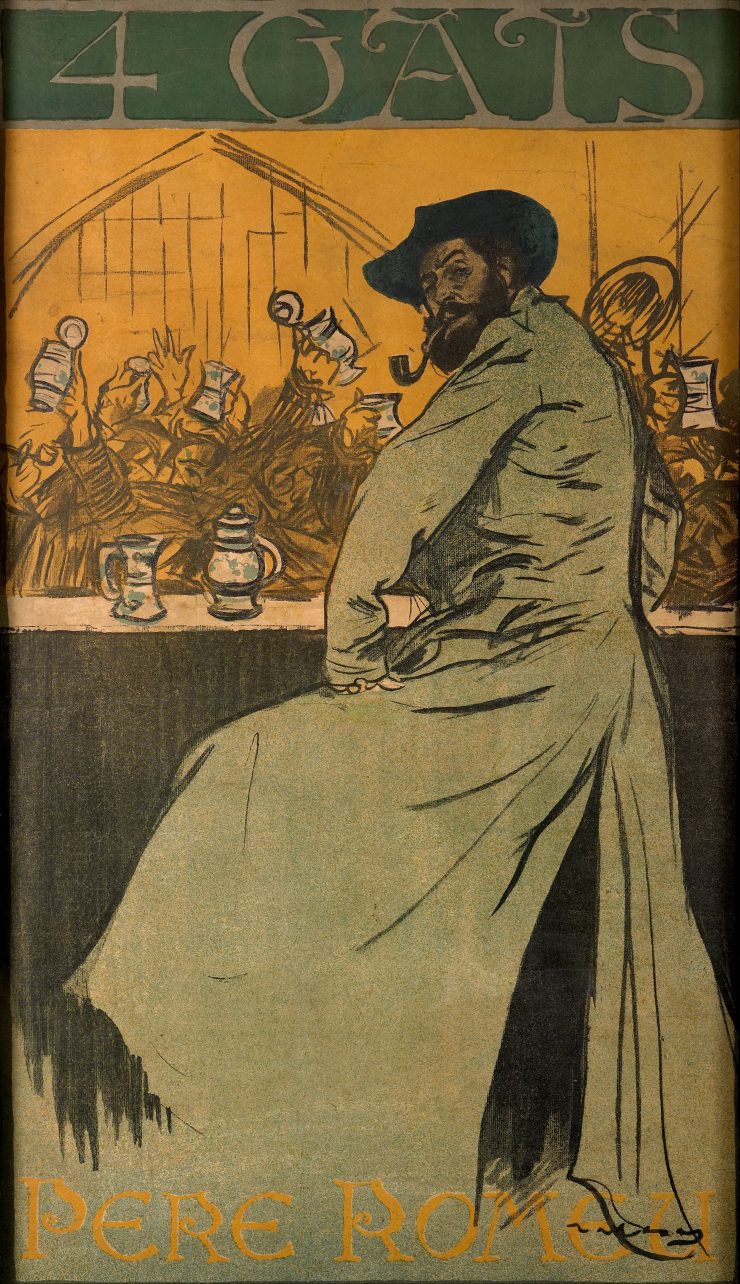
Beyond painting, Rusiñol founded the Cau Ferrat in Sitges, epicenter of the Modernist Festivals, while Casas excelled in social painting and poster design. In 1897, together with Miquel Utrillo and Pere Romeu, they opened the tavern Els 4 Gats in Barcelona, a multifunctional space for gatherings, exhibitions, and performances that became the nerve center of the Modernist avant-garde. Emerging artists such as Pablo Picasso and members of the Colla del Safrà gathered there.
At the same time, the magazine Quatre Gats was born, publishing fifteen issues in 1899 before being replaced by Pèl & Ploma and Forma, edited by Utrillo and illustrated by Casas, consolidating the written dissemination of the Modernist spirit.
In architecture, Catalan Modernisme reached its highest expression in Lluís Domènech i Montaner, Josep Puig i Cadafalch, and Antoni Gaudí. Domènech i Montaner is distinguished by the Palau de la Música Catalana and the Hospital de Sant Pau, where creative use of iron, glass, ceramics, and mosaic stands out. Puig i Cadafalch combines Modernist language with Catalan tradition and Neo-Gothic style in buildings such as Casa de les Punxes and Casa Amatller. Gaudí, deeply inspired by nature, developed an architecture of organic forms in works such as Casa Batlló, Park Güell, and the Sagrada Família, becoming the ultimate symbol of Catalan Modernisme.
In conclusion, Catalan Modernisme combines international influences with its own creativity, transforming painting, architecture, and cultural life, and turning Catalonia into a space of artistic innovation where art becomes an expression of modernity and identity.